Why trade index CFDs?
Did you know that trading indices can give you insights into a country’s stock market performance?
Why choose TMGM for Forex trading?

Oil market trading

Spreads starting from 0.2 pips

10+ Tier 1 liquidity providers

NY4 server

Leverage up to 1:500

No handling fees

No requotes

Trusted and regulated broker
Transparent Spreads
| Symbol | Bid | Ask | Action |
|---|
Frequently Asked Questions
What are the main differences between CFD index trading and stock trading?
Stocks represent shares of a company. Stock price movements are entirely dependent on the company’s performance, finances, and prospects. Indices track a group of companies that represent an industry or a country’s economy.
If you trade stock CFDs, your analysis will focus on the financial data and charts of a single company. However, with index CFDs, you’ll view the economy and stock market as a whole.
What are the benefits of trading index CFDs?
Indices give you exposure to a broad range of market sectors. For example, if you want to profit from a booming US economy, you can buy a CFD that tracks the S&P 500.
Furthermore, you can use leverage to increase your position size without investing more capital. The capital requirements for trading index CFDs are much lower than those for trading index ETFs.
CFDs also track the underlying index. Other derivatives, such as index ETF options, do not closely reflect price movements due to expiration dates, time decay, market expectations, and other factors.
What factors influence index prices?
Because indices are composed of stocks from various companies, the performance of affected companies, industries, or sectors can affect the price of index CFDs. However, other factors are also important.
Geopolitics can either inspire market confidence or create uncertainty. Treaty announcements, conflicts, international disagreements, and political changes can lead to either bear or bull markets, depending on whether investors view these changes as positive or negative.
Interest rate changes and other monetary policy decisions, typically from central banks, can cause fluctuations in a country’s stock market index price.
Government policies, such as trade agreements and changes in corporate tax rates, can influence the performance of stock market indices. Generally speaking, more business-friendly decisions, such as lower taxes or incentives for certain industries, lead to an increase in index prices. Conversely, tax increases, new regulations, and other factors that slow business processes can cause index values to decline.
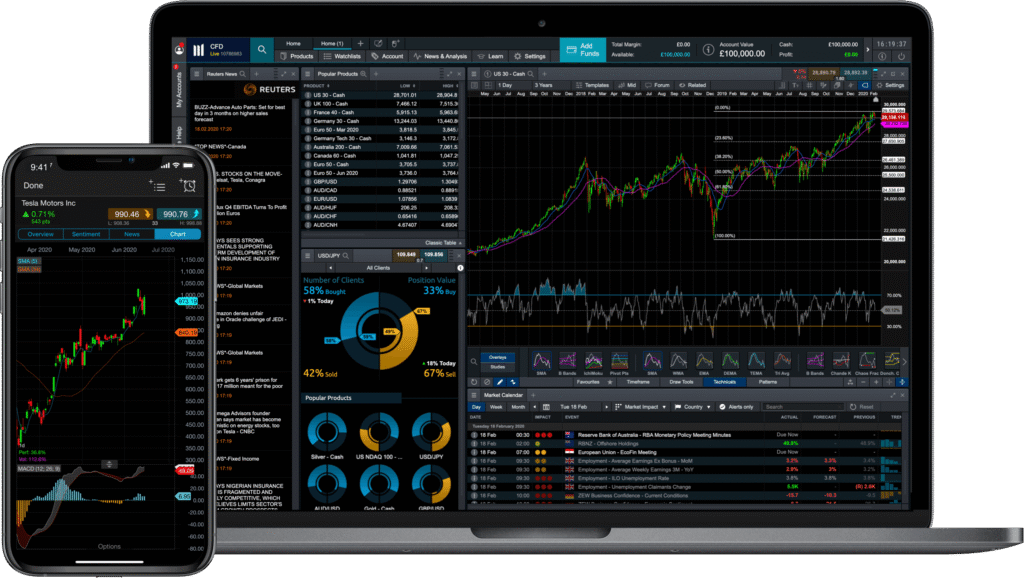
Are TMGM's indices futures or spot prices?
TMGM’s index CFDs use spot prices, directly tracking the underlying index, rather than futures prices. Spot prices are used for immediate settlement.